Government could let RBWM raise council tax above the cap for two years
10:58AM, Thursday 18 December 2025
0

The Government is proposing to give the Royal Borough ‘flexibility’ to increase council tax above the normal cap over two financial years.
Council tax rises are set at a 4.99 per cent threshold nationally.
This cap can be increased if the Government gives local authorities permission or if the rise is approved through a resident referendum.
Yesterday (Wednesday), the Government published its provisional settlement, which proposes six local authorities, including the Royal Borough, will be allowed to increase council tax above 4.99 per cent without a referendum in 2027/28 and 2028/29.
Details on the 2026/27 settlement – or the exact amount of future tax rises – have yet to be announced, but the council has said it will be ‘working through the detail and numbers to determine the impact on our budget’.
The six authorities also include wealthy London boroughs and have been selected because they ‘have the lowest council tax levels of any upper tier authorities in England’.
The Government argues this is unfair, as some areas are paying ‘radically lower’ levels of council tax despite homes being worth more.
“The reality of this is that the council tax bill for a house worth £10million in Westminster can be less than an ordinary family home in places like Blackpool and Darlington,” it said.
The Government added: “[This will] increase fairness for taxpayers, provide better value for money, and enable areas to rebalance disparities in their council tax levels.”
A Royal Borough spokesperson said: “Having now received the provisional settlement from Government, we will be working through the detail and numbers to determine the impact on our budget for 2026/27 and the medium-term.”
In 2025/26, RBWM was also allowed to increase its council tax to 8.99 per cent.
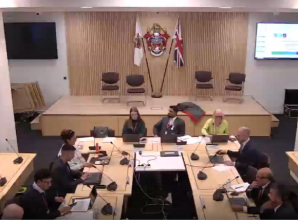
But at a cabinet meeting on Tuesday (December 16), the council’s cabinet member for finance, Councillor Lynne Jones (Ind, Old Windsor) said:
“When our council tax is so much lower than anywhere else, last year our 8.99 per cent [increase] was the same in cash terms as the councils around us, pretty much.
“Residents need to hear what it was going to cost them in cash terms because as with any budget, statistics and percentages don’t really tell you anything.”
She added that any increase above the national cap will see an ‘additional budget’ allocated to support the borough’s vulnerable residents.
The council’s draft budget for 2026/27 states that the council will have a £50million shortfall in funding and the authority will require a capitalisation direction from the Government – otherwise known as Exceptional Financial Support (EFS).
Budget papers showed this £50million gap will increase to £112million by 2030/31, if council tax rises were kept at the usual 4.99 per cent threshold.
Two other scenarios have been modelled in the 2026/27 draft budget: increasing council tax every year across a three-year period to bring it ‘in line’ with the national average; or increasing council tax by £10 a week for a band D property.
Even if one of these two scenarios played out, the council would still need Exceptional Financial Support from the Government, and the budget gap could still grow to more than £60million by 2030/31.